Clothing Manufacturer With 1-Piece Samples and a 20-Piece MOQ
Jafsu Enterprises is a custom clothing manufacturer in Sialkot building streetwear, sportswear and activewear from your own patterns. Most clothing manufacturing companies start at 200–500 pieces. We sew one piece first, then run production from 20 — every print, embroidery and woven label on our own floor, shipped to the USA, UK, Canada, Europe and Australia.
Or message +92 347 0849427 on WhatsApp. Every enquiry gets a reply within 24 hours.
Order terms at a glance
What Do Clothing Manufacturers Actually Do?
Clothing manufacturers turn a design into finished garments: sourcing the fabric, cutting the pattern, stitching the panels, decorating and labelling. Custom clothing manufacturers work from your own pattern and tech pack rather than adding a print to a stock blank, so the fit, the fabric weight and the neck label all belong to your brand rather than to a supplier.
Two very different businesses use that word. Some clothing manufacturers suppliers are trading offices that place your order with a factory they do not own. Others are the factory. Jafsu Enterprises is the second kind — a garment clothing manufacturer with cutting, stitching, printing, embroidery and packing under one roof in Tibba Jalian, Sialkot. It matters because when you ask who manufactures for clothing brands at low volume, most large factories will not: a 20-piece order costs them more in changeover than it earns. That is exactly the work we take.
Six Garment Families, One Factory Floor
Each family runs on a different fabric group and construction. Every garment is graded to your measurements, not adapted from a stock block.
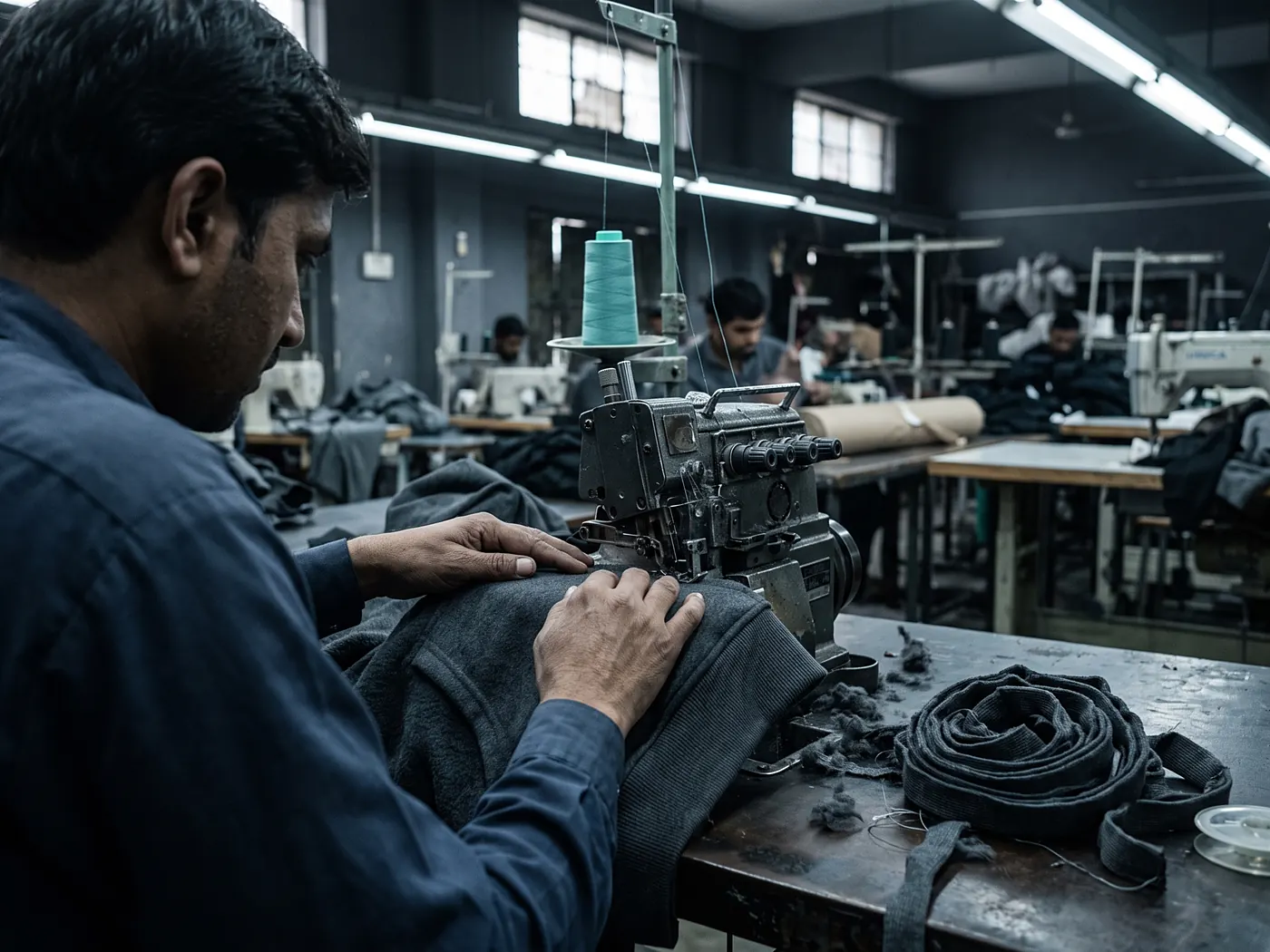
Hoodies & sweatshirts
Drop-shoulder, boxy and classic-fit blocks in French terry and three-thread fleece, with cuff rib specified separately from the body.
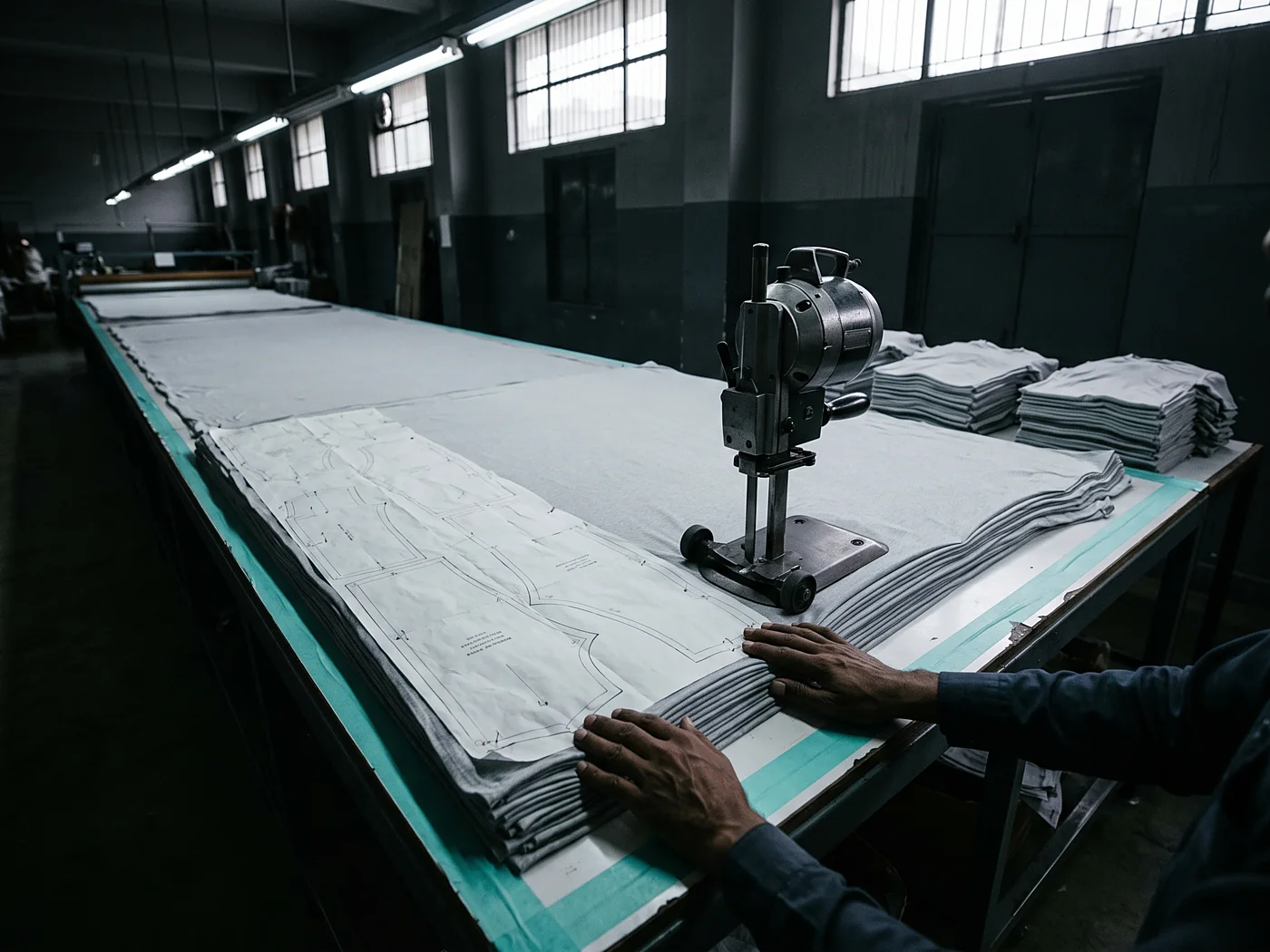
T-shirts & oversized tees
Combed cotton and CVC jersey, side-seamed, twin-needle hemmed and shoulder-taped, graded across the full YS–4XL range.
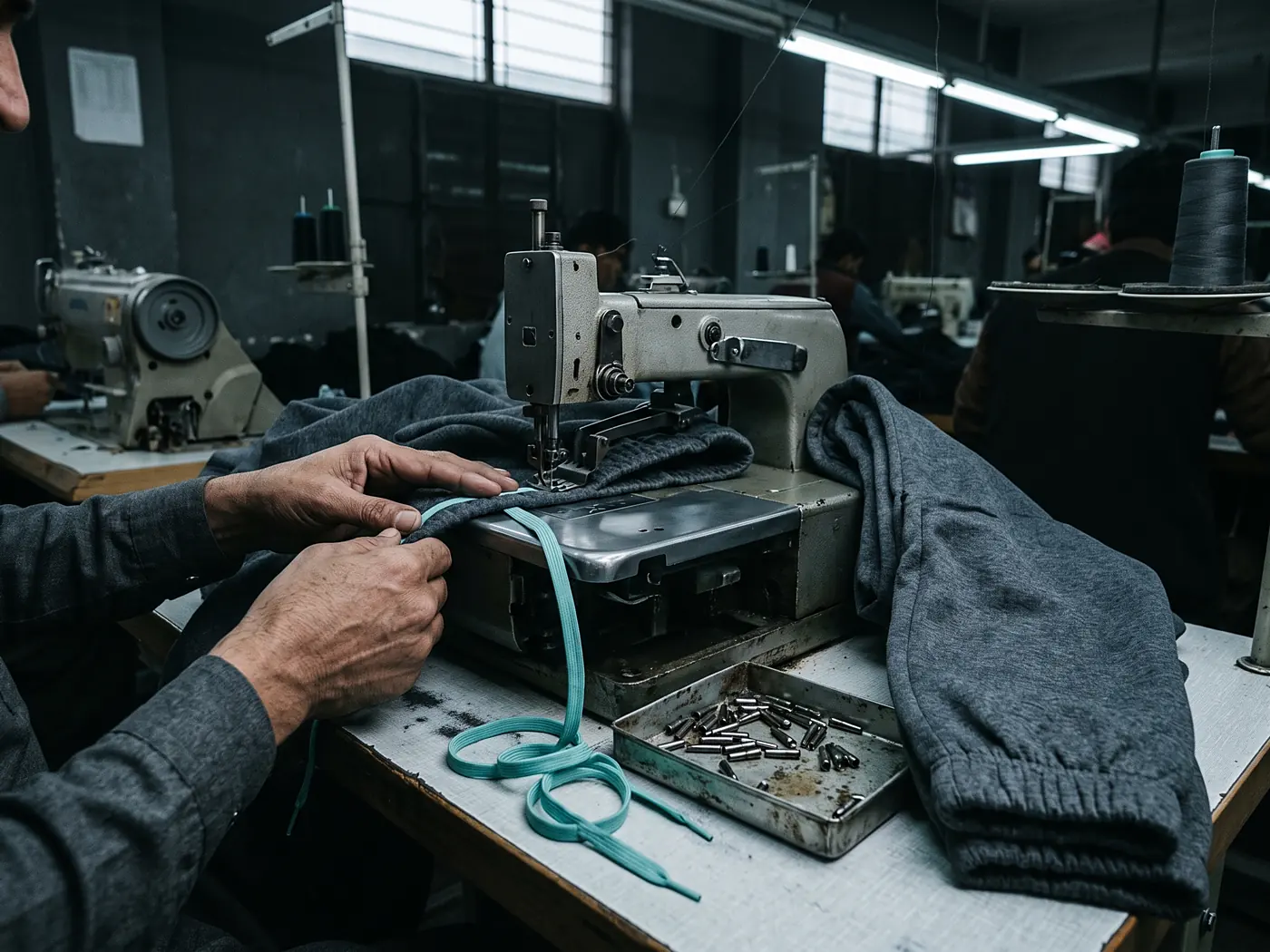
Joggers & sweatpants
Tapered, straight and wide-leg blocks with drawcord or elasticated waists and cuff heights set to your spec.
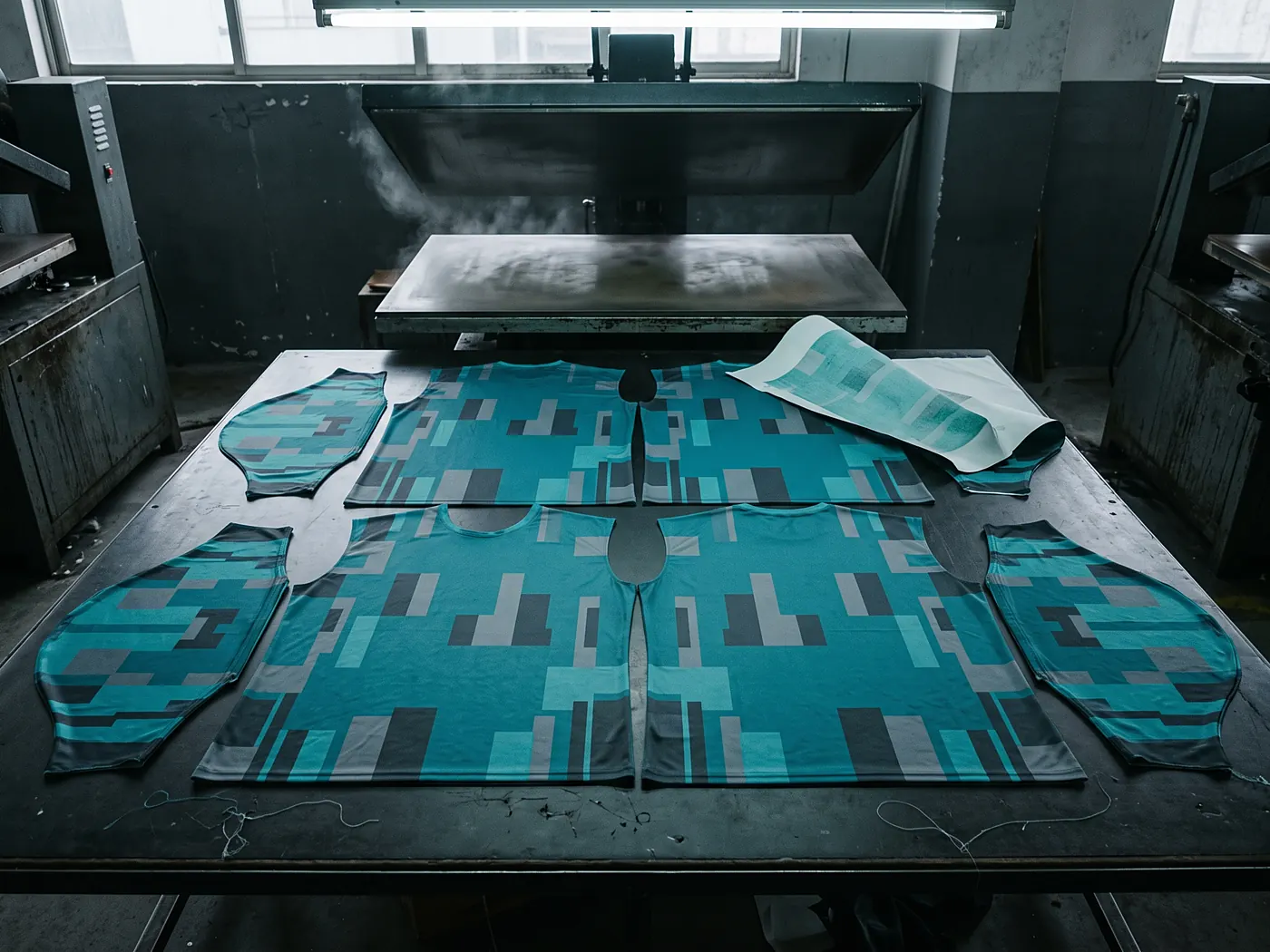
Sublimated team kits
Panel-printed uniforms for football, basketball, rugby and volleyball, with numbers dyed into the fibre rather than printed on top.
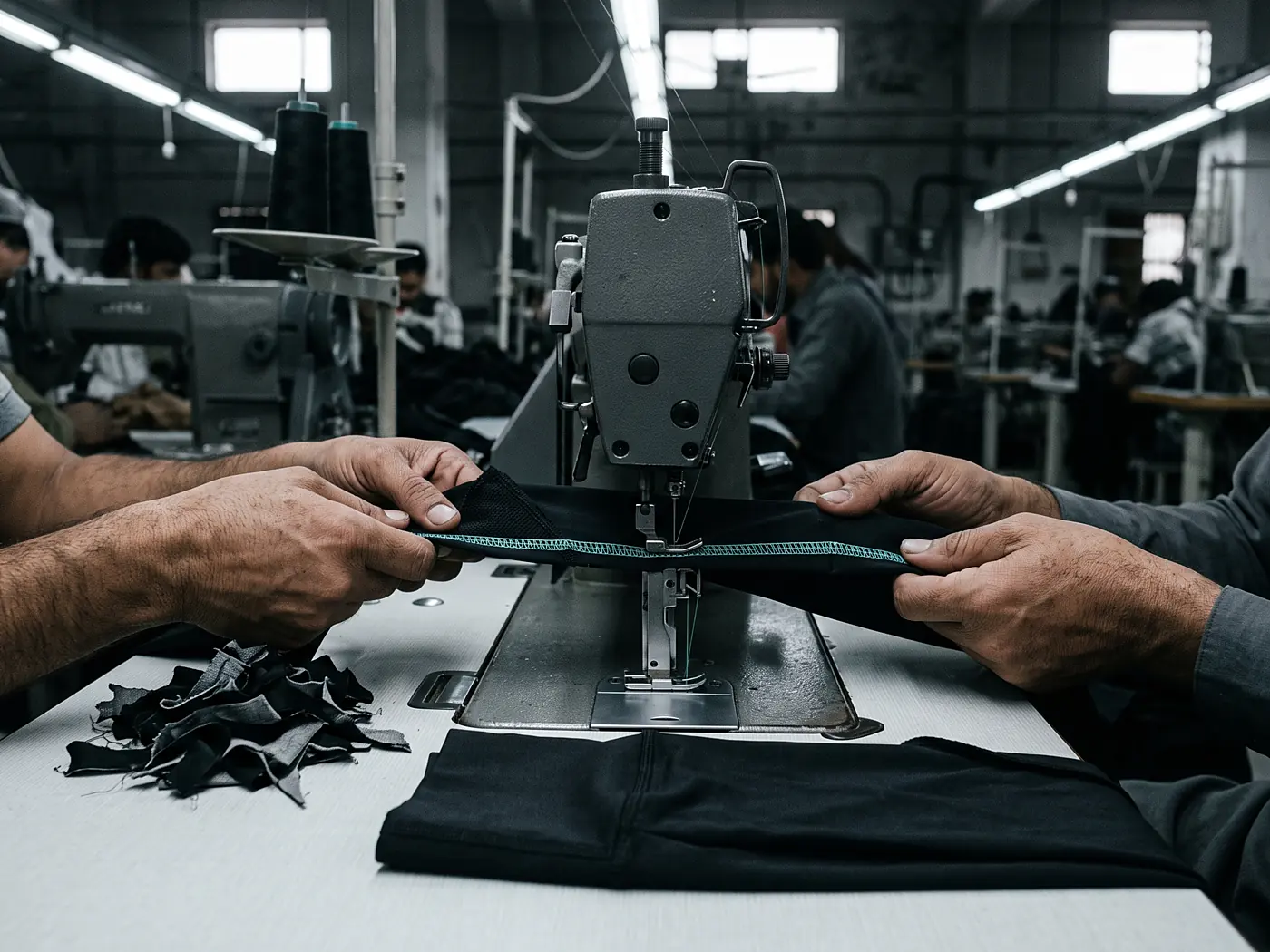
Leggings, bras & compression
Four-way stretch knits with flatlock seams, gusset panels and a waistband heavy enough to stay opaque under load.
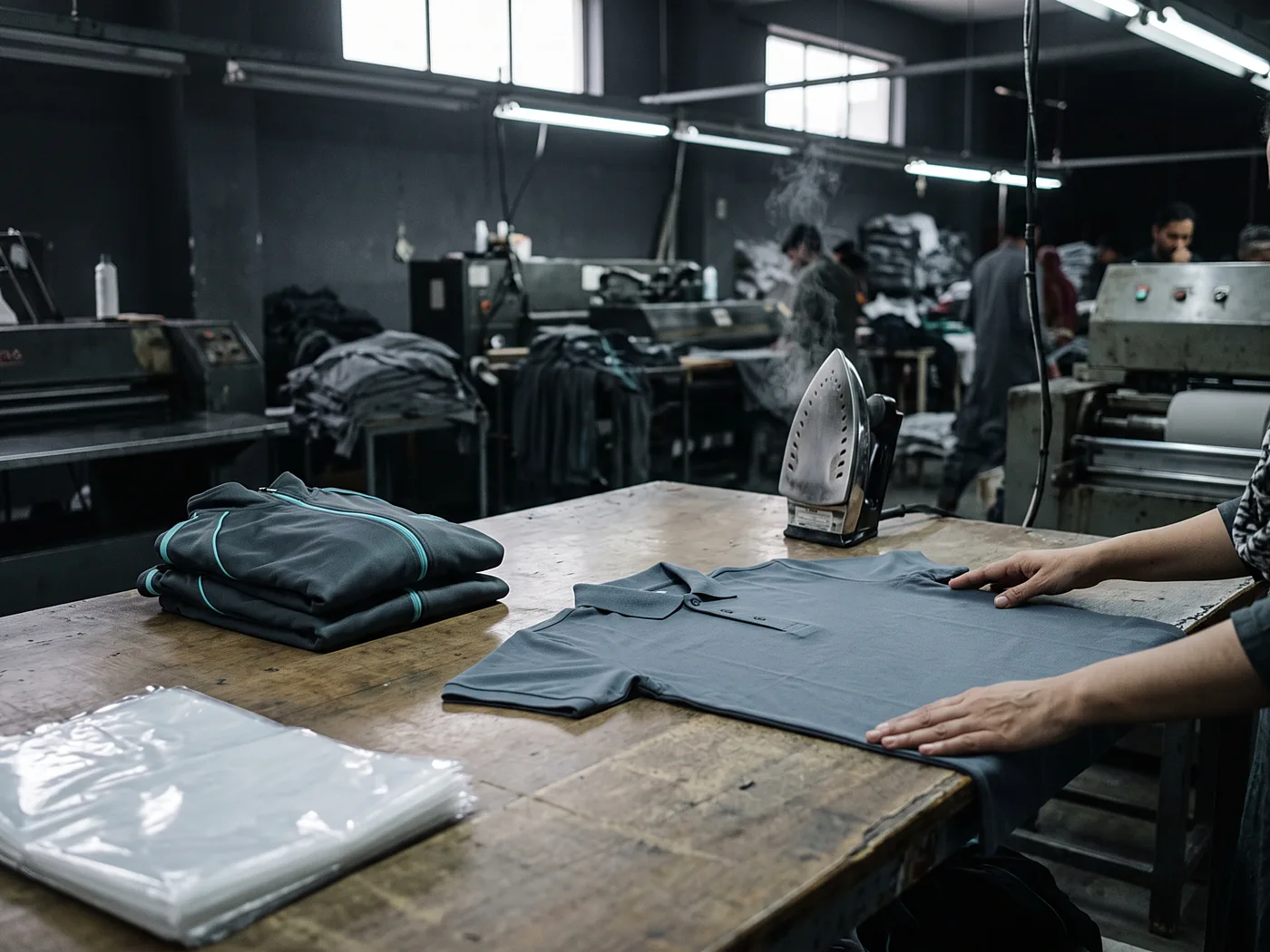
Polos, shorts & tracksuits
Piqué and interlock polos, woven and knit shorts and two-piece tracksuits for clubs and uniform contracts.
How to Find a Clothing Manufacturer Worth Trusting
Four questions separate a factory from a middleman. Ask them of us, and ask them of everyone else on your shortlist.
- Can I buy one sewn piece first? A supplier insisting on a 100-piece “sample run” is asking you to fund their setup. Ours is one piece, in your fabric and your fit.
- Who owns the printing? Ask for the building, not the brand name. If decoration sits at a third-party shop, every correction becomes someone else’s queue.
- Where is the graded measurement chart? “S to XXL” is a label, not a spec. You want chest, length, sleeve and cuff per size before cutting starts.
- How is quality evidenced? Photographs and video of the actual run, before the balance is due — not after the carton has shipped.
What you get in writing is the whole specification: composition, fabric weight, construction, seam and stitch type, decoration method and the graded chart, signed off before a single metre is cut and checked back against the garment at inline and endline inspection. Your patterns and artwork stay yours. Most work starts as cut and sew production from a customer’s own block.
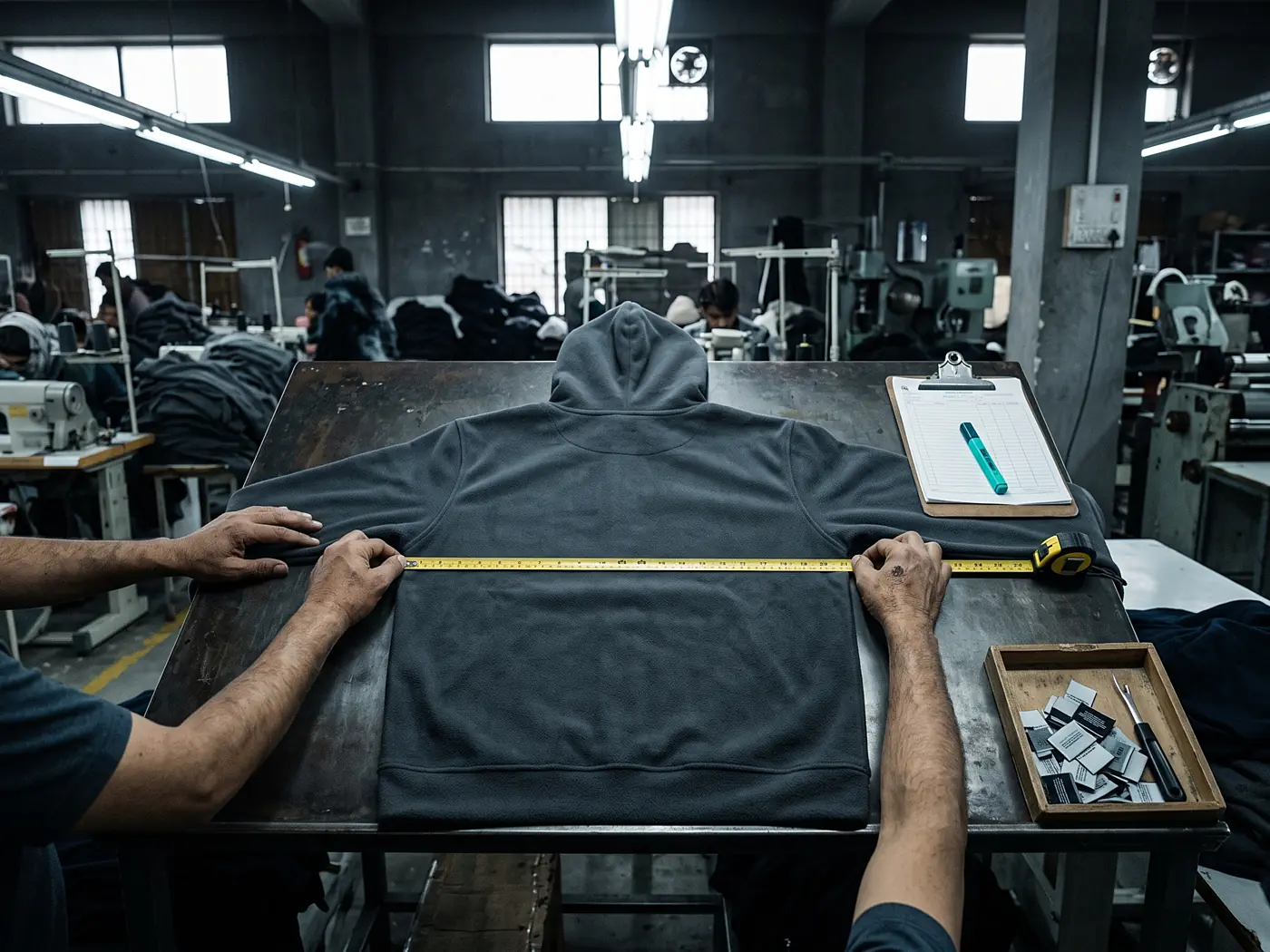
What lands in your inbox
An itemised per-piece costing, a digital mockup, the graded chart for every size ordered, and QC photographs and video of your run before the balance is due.
Fabric Weights, Quantities and Lead Times
Fabric weight is the biggest quality signal in a garment and the number most brands guess at. Metric buyers work in GSM, US buyers in ounces per square yard; one oz/yd² equals 33.906 GSM, so both are given.
| Garment family | GSM | oz/yd² | Compositions we run |
|---|---|---|---|
| Performance sportswear | 140–220 | 4.1–6.5 | Interlock, birdseye mesh, micro poly, poly-spandex |
| T-shirts & light streetwear | 180–280 | 5.3–8.3 | Combed cotton, CVC, cotton-elastane |
| Gym & activewear stretch | 220–300 | 6.5–8.8 | 75% nylon / 25% spandex, poly-elastane, four-way stretch |
| Hoodies, sweatshirts & joggers | 320–450+ | 9.4–13.3+ | French terry, 3-thread fleece, cotton or 80/20 |
| Stage | What happens | Quantity / time |
|---|---|---|
| Mockup & costing | Tech pack reviewed, artwork placed, itemised per-piece price returned | 24–48 hours |
| Sample | One sewn piece for fit, hand-feel and decoration sign-off | 1 pc · 7–10 working days |
| Startup run | First drop or single colourway, split across the size curve | 20–40 pcs |
| Bulk 50–300 pcs | Full production with inline and endline inspection | 14–18 working days |
| Bulk 500–1,000+ pcs | Volume production, price breaks at 100 / 300 / 500 / 1,000+ | 20–25 working days |
| Dispatch | DHL, FedEx or UPS express door-to-door; air and sea freight for volume | 4–6 business days |
| Payment | Samples 100% advance; bulk 50% deposit, balance before dispatch against QC photos and video | PayPal · Remitly · Western Union · wire |
Bulk lead times are working days and start after sample approval, not after the enquiry. Sizes run YS–YXL youth and S–4XL adult. Decoration is priced per placement rather than folded into one vague figure — see screen printing options for how ink systems change hand-feel and cost.
How an Order Actually Runs
Four stages. You can stop after the second and owe nothing further.
-
Send the spec
A tech pack, a reference garment or a sketch with measurements — all three work. You get an itemised per-piece costing and a digital mockup, not a price range.
-
One-piece sample
A single sewn garment in your fabric, fit and decoration. Check the hand-feel, the shoulder drop and the print placement before any bulk commitment exists.
-
Sign-off and production
Measurements, GSM, trims and placements are locked in writing. The 50% deposit cuts fabric, then cutting, stitching, decoration and labelling run with inline inspection.
-
Evidence, then dispatch
QC photographs and video of your finished run reach you before the balance is due. Then express dispatch with tracking and customs paperwork handled at our end.
Four Kinds of Buyer, One Set of Terms
New labels
Clothing manufacturers for startups usually means a 50-piece floor. Twenty pieces per design lets a first drop exist without a warehouse behind it.
Established brands
Brands already shipping arrive looking for high quality clothing manufacturers as a second source — spare capacity, or a hedge against one factory going quiet.
Clubs, schools & gyms
Sublimated kits, warm-ups and branded member ranges, sized across youth and adult curves in the same run rather than two orders.
Agencies & distributors
Merch agencies, promotional distributors and corporate uniform programmes running repeat work under their own labelling.
Whichever group you sit in, the output is private label: custom woven neck labels, wash tags, swing tags and branded polybags are part of the build, not an upsell — which is what separates private label clothing manufacturers from a printer relabelling blanks. Category detail lives on the streetwear, sportswear and fitnesswear pages.
Questions Buyers Ask Before Sampling
How do I find a clothing manufacturer for my brand?
Shortlist three to five factories, then judge them on evidence rather than presentation. Ask each for a single sewn sample, a graded measurement chart, an itemised per-piece costing and confirmation of which processes happen in their own building. A supplier who can produce all four quickly is a factory; one who cannot is usually an agent. Jafsu Enterprises samples from one piece and returns costing and a mockup within 24 to 48 hours.
What is the minimum order for custom clothing manufacturers?
Jafsu Enterprises produces samples from a single piece and bulk from 20 pieces per design and colourway, split across the size curve. Most factories set a floor of 200 to 1,000 pieces per design, and even the low-MOQ specialists usually start at 50 to 60. A 20-piece run lets a new label launch a real collection without holding unsold stock.
Are you one of the American clothing manufacturers?
No. Jafsu Enterprises manufactures in Tibba Jalian, Sialkot, Punjab, Pakistan and ships to the United States by DHL, FedEx and UPS express in 4 to 6 business days. Domestic US production gives you shorter transit times and a Made-in-USA label, which matters for some brands. Overseas cut and sew gives a lower unit cost and a much lower minimum. US buyers should price in duty and customs at their end before comparing the two.
Do you offer on demand clothing manufacturing?
Not in the print-per-order sense. That model decorates a garment only after a customer buys it, which suits blanks and unlimited designs but leaves you with a supplier’s fit, fabric and neck label. Our nearest equivalent is the one-piece sample followed by a 20-piece run, so you validate a design on a real garment and then produce in the smallest batch we can cut.
What makes the best clothing manufacturers different?
Specificity. Weak suppliers publish adjectives — premium, one roof, low MOQ — and no numbers. A strong supplier will name the GSM, the composition, the seam and stitch type, the grading tolerance and the price breaks in writing before you pay anything, and will show photographic evidence of your run before taking the balance. Judge a shortlist on how much of that a supplier volunteers unprompted.
Can you manufacture under my own private label?
Yes. Every order ships fully branded: custom woven neck labels, satin wash tags, PVC and embossed swing tags and branded polybags, so garments arrive retail-ready. Your designs, patterns and artwork remain your intellectual property and are never reused or resold. That full-package approach is what a private label clothing manufacturer should mean, as opposed to relabelled stock blanks.
What counts as sustainable clothing manufacturers?
Judge it on what a supplier can actually show you. Our practical contribution is a 20-piece minimum, which leaves far less unsold stock behind than a 500-piece commitment, and water-based or discharge ink systems in place of plastisol wherever the fabric allows. On certification we would rather be straight with you than decorative: we display no certification logo we cannot back up on request. If a certificate is a hard requirement for your buyer, ask any supplier for the certificate number and the issuing body, then verify it with the issuer directly.
What GSM should I choose for my garment?
Match the weight to the category. T-shirts and light streetwear sit at 180–280 GSM, which is 5.3 to 8.3 oz/yd². Hoodies and joggers run 320–450+ GSM, or 9.4 to 13.3+ oz/yd². Performance sportswear uses 140–220 GSM interlock and mesh, and gym leggings and bras need 220–300 GSM four-way stretch to stay opaque under load. One oz/yd² equals 33.906 GSM.
Do I need a tech pack to start production?
No. A tech pack speeds up sampling and cuts revision rounds, but we can work from reference photographs, a physical garment or a sketch with measurements. The full specification — measurements per size, GSM, composition, trims and decoration placements — is confirmed with you in writing before any fabric is cut, so nothing is left to interpretation on the floor.
Which countries do you ship to and how are you paid?
Finished orders ship to the United Kingdom, United States, Canada, Europe and Australia by DHL, FedEx and UPS express, with air cargo and sea freight available for larger runs. Samples are 100% in advance via PayPal, Remitly, Western Union or bank wire. Bulk runs on a 50% deposit, with the balance due before dispatch and released against QC photographs and video.
Send a Sketch. Get One Piece Back.
Itemised costing and a digital mockup within 24–48 hours. A sewn sample in 7–10 working days. Production from 20 pieces when the one in your hand is the one you want to sell.
Tibba Jalian, Sialkot, Punjab, Pakistan · info@jafsuenterprises.com · @jafsusports · Every enquiry answered within 24 hours.